
Why Water?


The one resource with no substitute
You can live without electricity. You can live without a car, a phone, or a grocery store. Water is the only thing on that list where going without it is measured in days.
That makes water different from every other resource, and it makes the question of who gets it a question about power rather than about supply. There is enough water. What varies is whether someone built a system to carry it to you, whether that system is maintained, and whether anyone answers when it fails. Those are decisions, and decisions have people behind them.
Globally, one in four people, about 2.1 billion, still lack access to safely managed drinking water, including 106 million who drink directly from untreated surface sources. Those numbers are not spread evenly. People in the least developed countries are more than twice as likely to lack basic drinking water and sanitation, and in fragile contexts safely managed coverage runs 38 percentage points lower than elsewhere. The same pattern holds inside wealthy countries, at a smaller scale and with the same causes.
2.1 billion
people lack safely managed drinking water
106 million
drink directly from untreated surface sources
1 in 4
people worldwide, as of 2024
38 points
the coverage gap in fragile contexts
WHO/UNICEF Joint Monitoring Programme, Progress on Household Drinking Water and Sanitation 2000–2024, 2025.
Questions Worth Asking
Where does the water in your kitchen actually come from?
Most people can't answer this. It comes from a specific river, reservoir, or aquifer, travels through a treatment plant someone operates, and reaches you through pipes someone is responsible for maintaining. Every one of those steps can fail, and when it does, it usually fails in the same places.
What does it cost to not have reliable water?
Bottled water, boiled water, missed school and work, medical costs, and time. Families with the least reliable water usually pay the most per gallon.
Who decides whether your water is safe?
Utilities test their own water and report the results to regulators. The testing schedule, what gets tested for, and what happens when a sample fails are all set by policy, not by nature.
Does this happen in the United States?
Yes. Aging pipes, lead service lines, and boil-water notices are ordinary features of American water systems, concentrated in cities that lost tax base and political weight decades ago.
Why do two towns on the same river get different water?
Because they have different systems, different budgets, and different amounts of political leverage. Older systems in lower-income areas get repaired last, and the cost of that delay lands on the people least able to absorb it.
Why teach this to children?
Because most people never get asked. Water is the one system you use every day and are never taught to see, and what you can't see, you can't notice failing for anyone else.
Watch
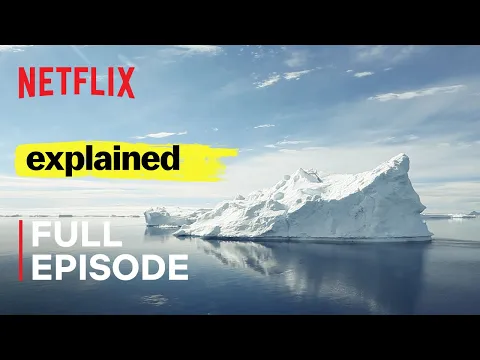
Two documentaries on who gets water and why, one global and one American.


Subscribe to Our Newsletter
Navigation
Home
About
Programs
Learn
Explore
Watermarks
Blog
Contact
Central New Jersey
The Ripple Effect is a program of Starting Ripples Corp., a registered 501(c)(3) nonprofit © 2026 Starting Ripples Corp.